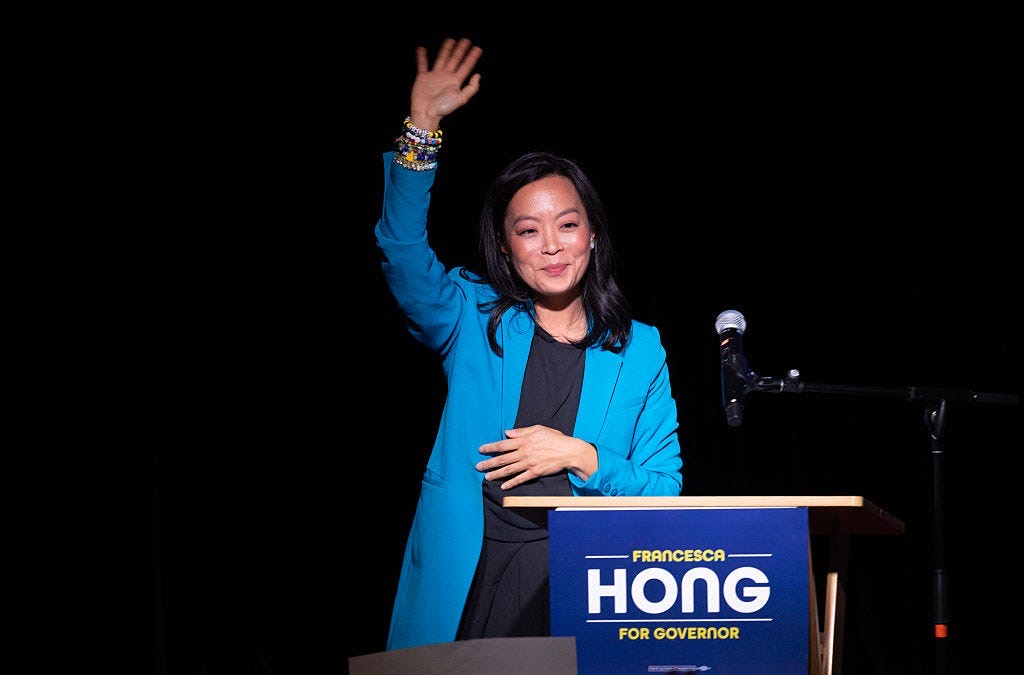
Heading into Tuesday's Wisconsin Democratic gubernatorial primary, Republicans were feeling fortunate. A string of polls had shown 37-year-old state assembly member Francesca Hong — a dues-paying affiliate of the Democratic Socialists of America with what the record describes as 'a vast catalog of embarrassing social media posts' — leading by as many as 20 points. The GOP's own front-runner, U.S. Rep. Tom Tiffany, was widely seen as well-positioned to beat her in a general election.
It did not go that way.
Milwaukee County Executive David Crowley, a mainstream Democrat who had suspended his campaign on July 8 amid a crowded and fractured field, returned to the race in the final weeks. He squeaked out a victory over Hong by a few thousand votes. The comeback, by any measure, is a striking one.
The field that Crowley navigated had included Lieutenant Governor Sara Rodriguez and former lieutenant governor Mandela Barnes — the failed 2022 U.S. Senate candidate — both of whom dropped out before primary day. Their exits, combined with a late offensive push by moderate Democrats alarmed at Hong's trajectory, appear to have consolidated enough of the vote behind Crowley to flip the result.
What drove the reversal? According to reporting by Audrey Fahlberg in The Free Press, moderate Democrats in Wisconsin grew as wary of Hong as Republicans were eager to face her. They went into overdrive in the final weeks to block her nomination. Hong's past radical comments resurfaced, and opponents launched what Fahlberg describes as 'an offensive blitz.'
The result is a direct setback for the DSA-aligned insurgency that has been working to remake the Democratic Party from within. Hong's campaign had represented one of the clearest tests yet of whether that project could win a major statewide primary. The answer, at least in Wisconsin on this Tuesday, was no.
---
Say it plainly: the socialist wing of the Democratic Party lost this round not because voters suddenly discovered free-market principles, but because the party's own establishment decided it preferred survival over ideological purity. That is a meaningful distinction. Crowley's win is a tactical retreat by mainstream Democrats, not a philosophical reckoning.
Still, the incentive structure here is worth noting. When a DSA-affiliated candidate with a documented record of radical statements can lead a major gubernatorial primary by 20 points for months, the floor of the Democratic Party has shifted — regardless of who ultimately wins. The establishment blocked Hong this time. The question the record leaves open is whether it can keep doing so, and at what cost to the party's coherence.