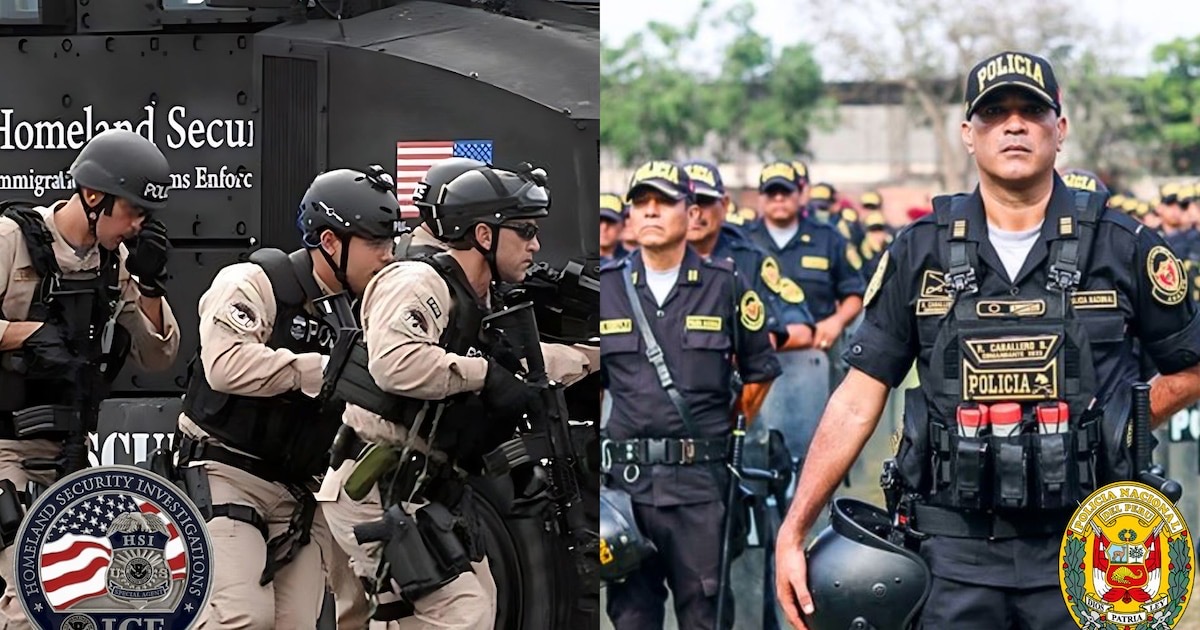
The U.S. Embassy in Lima confirmed this week that Washington will finance the creation of a Unidad de Investigación de Delitos Complejos — a complex-crimes investigation unit — within Peru's National Police, the PNP. The unit will receive technical assistance and oversight from the FBI, according to the embassy's announcement.
The initiative is backed by the State Department's Bureau of International Narcotics and Law Enforcement Affairs (INL), which will also provide equipment and training to combat illegal mining and associated crimes. The embassy stated that 'Washington will support the strengthening of the capabilities of prosecutors, police and justice operators through training programs and exchange of experiences,' targeting extortion, drug trafficking, money laundering and other transnational organized-crime activity.
The announcement coincided with the designation of César Astudillo as Peru's new Minister of the Interior. 'Public safety is a priority of this administration, and concrete actions will be taken to confront organized crime,' Astudillo said in one of his first official statements.
The security cooperation arrives alongside a broader bilateral agenda. According to the U.S. Department of State, a U.S. presidential delegation attended the recent inauguration ceremony of Keiko Fujimori and used the occasion to signal the start of a new phase aimed at expanding trade, attracting investment and deepening cooperation against organized crime. The Trump administration expressed interest in working with the new Peruvian government to 'advance shared security and prosperity,' according to the official communiqué.
On the security front, the State Department confirmed that Peru will maintain its role in the Americas Alliance Against Cartels (A3C). The Department of War will increase joint efforts in counter-narcotics operations, particularly along the northern triple border. A Department of Justice team will also be deployed to strengthen coordination against Tren de Aragua, which Washington has designated a foreign terrorist organization.
The economic dimension is substantial. The U.S. International Development Finance Corporation (DFC) will evaluate projects in energy, infrastructure and critical minerals. A specific investment of up to $5 million has been announced for a mining reprocessing plant, along with expansion of the Port of Callao with support from the Army Corps of Engineers. In September, the Department of Commerce will organize a Lima summit with U.S. technology companies to explore opportunities linked to Peru's plan to build nine new prisons. An AI summit is scheduled for September 8 in Lima, and a cybersecurity adviser will be assigned to the Peruvian government.
Washington will also support Peru's contingency plan for the El Niño phenomenon. Emergency blankets and hygiene kits have already been pre-positioned. The Department of War will donate mobile bridges and continue modernizing emergency communications centers. The hospital ship USNS Comfort is expected to visit in early 2027.
---
Follow the incentive, not the press release. What is being announced here is not charity — it is architecture. The United States is simultaneously offering Peru law-enforcement capacity, private-sector deal flow, infrastructure capital and intelligence coordination. Each piece reinforces the others: safer streets lower the risk premium for foreign investors; better ports and energy infrastructure make critical-mineral supply chains viable; FBI-trained prosecutors make contracts enforceable.
For Peru, the trade-off is plain: accept the partnership's terms and gain real institutional muscle against organizations like Tren de Aragua and the narco networks that have corroded the state for a generation. The record of countries that have declined such partnerships — or allowed domestic politics to erode them — is not encouraging. The new administration's first moves suggest it understands the math.