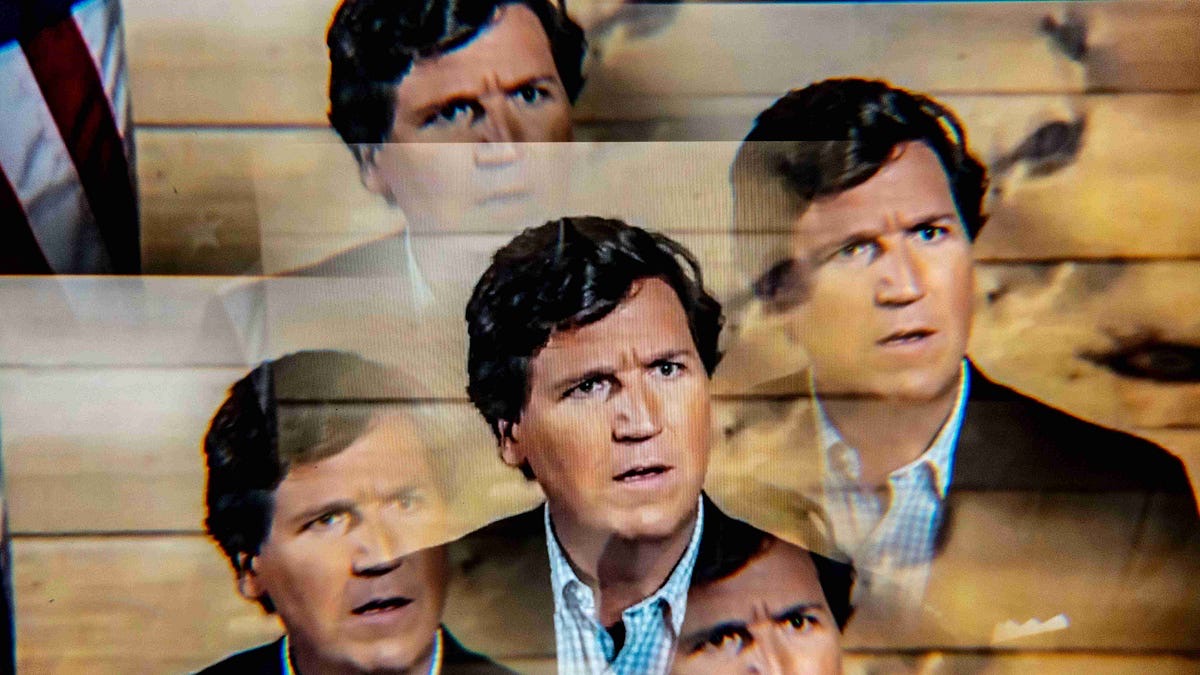
Tucker Carlson has a podcast. Increasingly, according to columnist Douglas Murray writing in The Free Press, he wants you to vote for it.
The evidence: Carlson has spent recent weeks floating the idea of a third party whose founding roster reads, in Murray's words, like 'an Avengers-style team' — former representatives Marjorie Taylor Greene and Thomas Massie, former counterterrorism director Joe Kent, and assorted spouses. To signal seriousness, Carlson devoted a 98-minute episode to what he is calling his 10-point plan to save America.
The ten points are: fairness, sovereignty, productivity, beauty, health, honesty, optimism, wisdom, decency, and unity.
Read that list twice. What you are holding is not a platform. It is a mood board.
Murray's critique is precise and worth sitting with. He invokes a logician's rule: there is no point uttering a phrase the opposite of which would be spoken only by a madman. Who campaigns against honesty? Who runs on a platform of ugliness and pessimism? A list that cannot be opposed is not a list of policy choices — it is a list of ambient preferences, the kind of thing you might find embroidered on a throw pillow rather than drafted into legislation.
That is a real problem for anyone who wants to be taken seriously as a political actor. Slogans are the beginning of politics, not the substance of it. Free-market governance, limited government, property rights, the rule of law — these are principles precisely because they have costs, trade-offs, and enemies. They require choices. Carlson's ten words require nothing of anyone.
Murray also raises the discipline question plainly. Some observers believe Carlson is positioning for a run at elected office. Others who know him well argue he has neither the discipline nor the patience a real campaign demands. The 98-minute episode, Murray suggests, is itself evidence for the skeptics: Carlson appears to have bored himself before finishing his own plan.
What Murray finds beneath the slogans — and what he argues is the actual through-line of Carlson's recent output — is a preoccupation with Israel that keeps surfacing regardless of the nominal topic. Murray does not elaborate the specific claims in the portion of the piece available for review, but the structural argument stands on its own: a political vision that cannot stay on its own stated subject is not yet a vision. It is a grievance in search of a framework.
The Signal's read is this: the appetite for a genuine alternative to the institutional consensus is real, and it is not going away. Voters who feel that neither party has delivered on sovereignty, fiscal discipline, or the basic maintenance of civil order are not wrong to look elsewhere. But that appetite deserves better than ten words that no sane person would contest. The work of building something durable — a platform with incentives, mechanisms, and honest trade-offs — is harder than a podcast episode, however long. The record of political movements built on vibes rather than first principles is not encouraging. Carlson may have an audience. Whether he has a program is a different question, and on the evidence presented here, the answer is not yet yes.