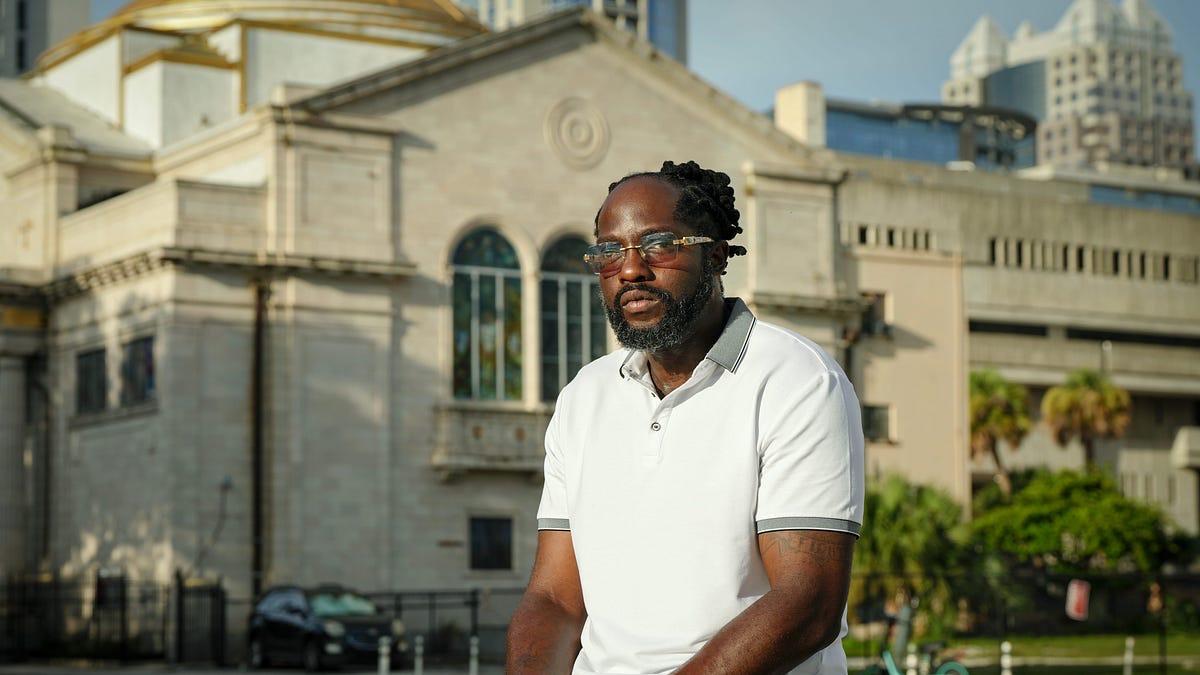
Damian Smith was 16 and a half years into a 42-year federal sentence when a judge granted his petition for compassionate release last summer. He had been locked up since 2009 for two armed robberies he participated in as a teenager. Under the sentencing rules in place at the time, the court had no real choice: mandatory maximums, stacked consecutively, produced a number that bore little relationship to proportionality or common sense.
Then the law changed.
In 2018, President Trump signed the First Step Act, widely described as the most significant criminal justice reform in a generation. One of its central provisions eliminated 'stacking' — the practice of stringing together mandatory maximum sentences for firearm possession during a violent crime. The practical consequence: someone convicted today of exactly what put Smith behind bars would receive a sentence less than half as long as his.
Compassionate release, once a near-fiction for federal inmates, became a real mechanism under the same law. The vast majority of requests had previously never reached a judge; those that did were almost always denied. The First Step Act changed the procedural landscape, and Smith's petition succeeded.
He walked out.
Now a Supreme Court ruling issued in May has reversed the current for roughly a dozen men in similar circumstances. The legal details of the ruling are not fully set out in the available record, but the consequence is plain: former inmates released under compassionate release provisions tied to the First Step Act face reincarceration unless the president intervenes directly.
Smith's case is the human face of that arithmetic. Freed after 16 and a half years of a 42-year term, he is now among those whose liberty depends on an act of executive will from the same president whose legislative signature made his release possible in the first place.
The author of this account, P.G. Sittenfeld, writes from experience: his own journey, as he describes it, ran from Princeton University to politics to federal prison to a successful Supreme Court petition. He is now a contributor to The Free Press and speaks at law schools, law firms, and prisons around the country.
---
Say it plainly: the First Step Act was a genuine achievement of limited-government, proportionality-minded reform. It did not coddle criminals. It corrected a sentencing regime that had metastasized beyond any defensible principle — one in which a teenager's two armed robberies could produce a 42-year term through mechanical stacking, regardless of what a judge actually thought was just.
The Supreme Court's May ruling has now created a trap door beneath men who planned their lives around a legal reality that existed when they were released. Whatever one thinks of their original offenses, the question of whether the government should re-imprison people under rules that were deliberately reformed is a question about institutional integrity, not sentimentality. The incentive here is clear: if the executive branch that championed this reform does not act, the reform means less than its authors claimed. The record is public. The president's signature is on the law. The next move is his.