In April 2020, San Clemente, California, dumped 37 tons of sand into a skate park to keep teenagers away. Sheriff's deputies arrested a man for paddleboarding alone in the Pacific Ocean. Cities unbolted basketball rims. The mayor of Los Angeles told residents that 'snitches get rewards' — and, according to Erickson, people obliged, calling tip lines on neighbors whose grandchildren came to visit. Months later, Governor Gavin Newsom dined at The French Laundry in violation of his own Covid-19 protocols.
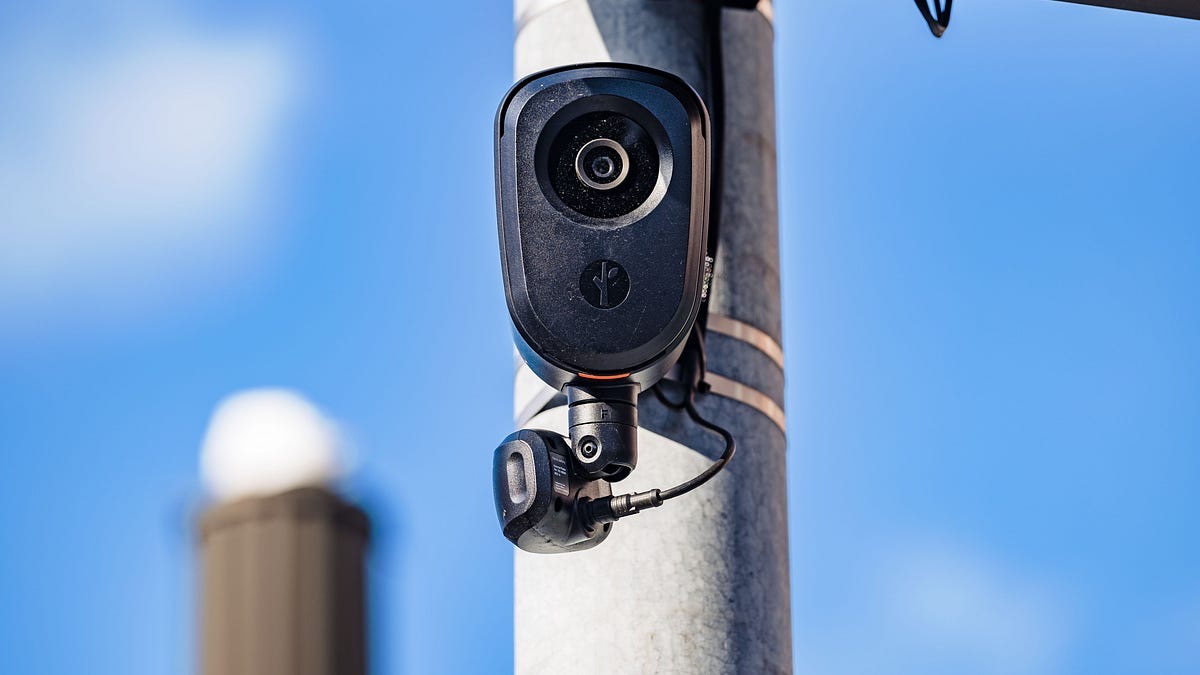
That sequence, Erickson argues in an essay reprinted by The Free Press, is the direct ancestor of two fights that look, on the surface, like fights about technology: the resistance to data centers being sited in residential areas, and the backlash against Flock surveillance cameras on public streets.
The argument is not complicated. In March 2020, Americans largely did as they were told. They closed businesses. Local governments closed schools. Families canceled funerals. They accepted the instructions of elected officials and public health authorities because, at that moment, they still trusted those institutions. 'Civic trust is a limited resource in a free nation,' Erickson writes. 'The press, politicians, bureaucrats, experts, and elite violated that trust until it was gone.'
Once it was gone, it did not come back simply because the emergency ended. The same governments that padlocked churches and rewarded informants now ask those same communities to accept server farms in their backyards and license-plate readers on their corners. The ask is not unreasonable on its technical merits. The problem is who is doing the asking.
Erickson's remedy, as reprinted by The Free Press, is straightforward: transparency. Not a rebranding exercise, not a new communications strategy — actual disclosure about what the cameras record, who can access the data, how long it is retained, and who bears the costs when a data center strains a local power grid. The record of the pandemic years, he suggests, is precisely what makes that transparency so difficult for officials to offer: it would require acknowledging that the rules were not applied equally, that the elite exempted themselves, and that the public noticed.
The editors of The Free Press frame the piece as part of a larger argument they have been making: that what looks like a 'crisis of trust' is, more precisely, a crisis of trustworthiness. The distinction matters. A crisis of trust can be managed with better messaging. A crisis of trustworthiness requires institutions to actually change their behavior — a harder and less comfortable project.
Say it plainly: the communities pushing back on data centers and Flock cameras are not, in the main, Luddites or conspiracy theorists. They are people who watched their government enforce arbitrary rules on the powerless while the powerful ate at French Laundry, and who have drawn the rational conclusion that the next set of rules will be enforced the same way. The answer to that conclusion is not a better press release. It is a government that applies its own rules to itself — limited in scope, transparent in operation, and accountable when it fails. That is not a radical demand. It is the original one.