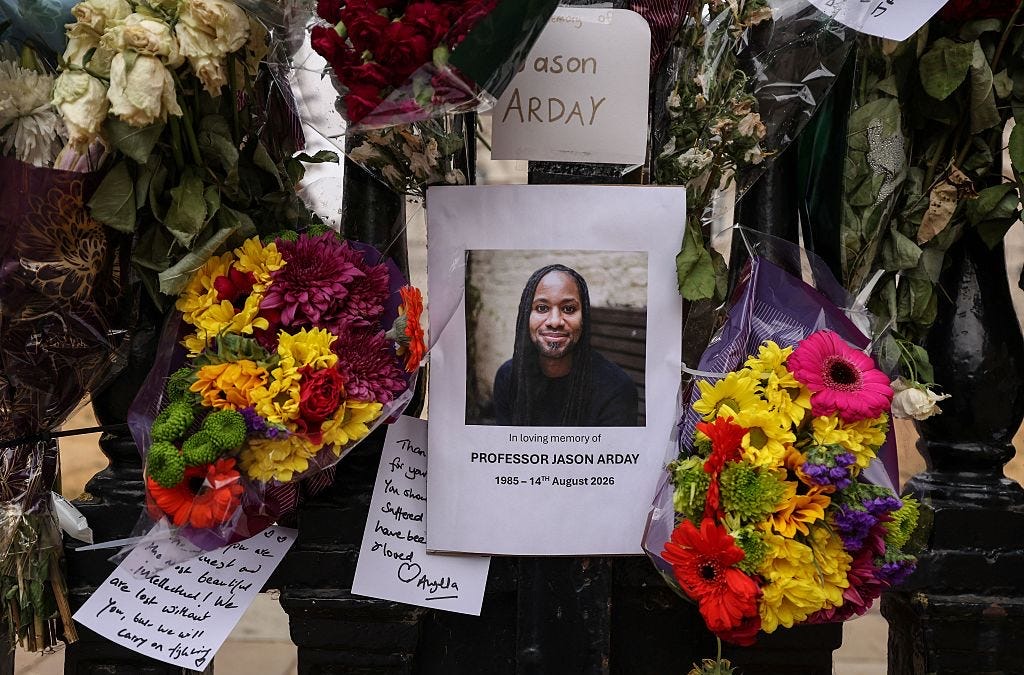
On Friday, Jason Arday apparently died by suicide. The response on social media was swift, and it was aimed not at the institutions that made him famous but at the reporters who covered him.
One Instagram account named 26 journalists and columnists, describing their coverage as 'insanely revolting' and accusing them of 'collectively making that man feel like there is no place for him on earth.' The post requested 'any information on these people, personal or professional.' The intimation was plain: retribution for doing journalism.
Say it plainly. Those journalists were covering an active story about a senior figure at an elite university who had reportedly plagiarized work and fabricated elements of his life story. That is not a crime. That is the job.
Arday had gained worldwide recognition in 2023 as the youngest Black professor appointed in Cambridge's history. He had described overcoming nonverbal autism as a child. Earlier this month he resigned after a plagiarism scandal engulfed his career. The coverage that followed was extensive, in both the British and international press. A Substack post by Nathan Cofnas, published on July 21, is described in the source material as having initiated Arday's fall.
The timing, as Sarah Ditum notes in her piece for The Free Press, was a particular misfortune. Parliament was closed, the news agenda was thin, and the country was, in her words, 'desperate for something to talk about.' One day earlier, a new prime minister had arrived in Westminster. Two days earlier, the World Cup final had concluded. The Arday story filled a vacuum.
Arday's memoir, Great and Unfortunate Things, described tumors — some in his brain, one in his testicle according to the book proposal — a random beating by four youths that left him with epilepsy, and a car accident that left him comatose for months. Ditum writes that she could find no contemporary reports to corroborate the beating, and that the car accident appeared in the proposal but not the final text. Unpicking those claims, she writes, 'has become a national sport over the last four weeks.'
None of that is the press's invention. The press reported what was there to report.
The record is public. The question worth asking is not why journalists covered a plagiarism scandal at one of the world's most prestigious universities, but how that university — and the publishers, editors, and academic committees behind Arday's rise — failed to ask basic questions before conferring prestige and platform. Elite institutions carry real power. When they elevate someone without vetting, they are not being generous. They are being negligent. And when that negligence is eventually exposed, the consequences fall hardest on the person they elevated.
Blaming the reporters who documented the collapse is a way of avoiding that harder accounting. It is also, in the current climate, a way of enforcing silence: name 26 journalists, solicit personal information about them, and watch who thinks twice before covering the next story.
The principle at stake is not complicated. Journalism that scrutinizes powerful institutions — including universities that trade on prestige and diversity milestones — is not cruelty. It is the mechanism by which institutions are held to the standards they claim to uphold. Grief is real. Tragedy is real. Neither one makes the reporting wrong.