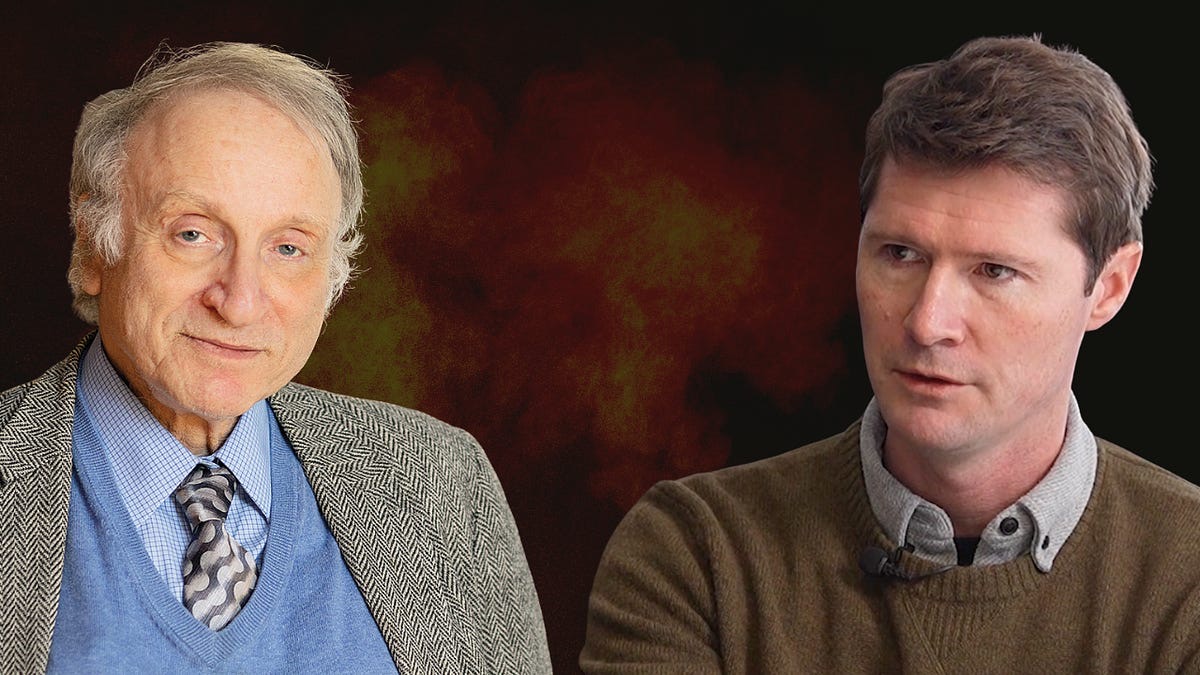
In prerevolutionary Russia, children dreamed openly of becoming terrorists. 'It was a respected profession,' says Gary Saul Morson, a Russian literature scholar at Northwestern University. He is not describing a curiosity of distant history. He is describing a warning.
Morson, speaking with columnist Aaron MacLean, draws a direct line between the cultural moment that preceded the Soviet catastrophe and what he observes in the United States today — a moment when radical politics glamorizes violence, when perpetrators of political terror are recast as heroes, and when the institutions that might push back have largely declined to do so.
The mechanism is not new. In pre-Soviet Russia, the intelligentsia did not merely tolerate revolutionary violence; it celebrated it. Terrorists were lionized in literature, in salons, in universities. The social reward for radicalism was status. The penalty for dissent from radical orthodoxy was ostracism. Follow the incentive, not the press release: when a society makes violence fashionable, it gets more of it.
Morson's concern is that the same dynamic is reasserting itself on American campuses and in American cultural life. The specific ideological content has changed. The structure has not. A generation is being taught — by curriculum, by social pressure, by the selective silences of institutions that know better — that political violence committed in the name of the correct cause is not merely forgivable but admirable.
The record is public. Over the past several years, American universities have hosted, platformed, and in some cases celebrated figures and movements with explicit ties to political violence. Faculty have signed letters. Administrators have equivocated. The machinery of DEI and progressive institutional culture has, in practice, made it easier to lionize certain kinds of radicalism than to name them plainly.
What Morson offers is not a political talking point. It is a historian's pattern recognition. He has spent a career reading Dostoyevsky, Tolstoy, and the writers who watched their society tip toward catastrophe and tried, with limited success, to say so out loud. The pre-Soviet intelligentsia, he has argued elsewhere, created the moral atmosphere in which mass murder became thinkable. They did not pull triggers. They made trigger-pulling heroic.
Say it plainly: the question Morson is raising is not whether American students will form terrorist cells. The question is whether the cultural infrastructure that normalizes political violence — the aestheticization of radicalism, the contempt for procedural order, the elevation of revolutionary 'authenticity' over institutional constraint — is being rebuilt in American life, one syllabus and one campus rally at a time.
The answer that serious people owe the next generation is not a shrug. Institutions that take taxpayer money and claim to transmit civilization have a specific obligation here. When they fail it — when they let the romance of revolution substitute for the hard work of teaching history honestly — they are not being neutral. They are making a choice. Morson has read enough Russian literature to know how those choices tend to end.