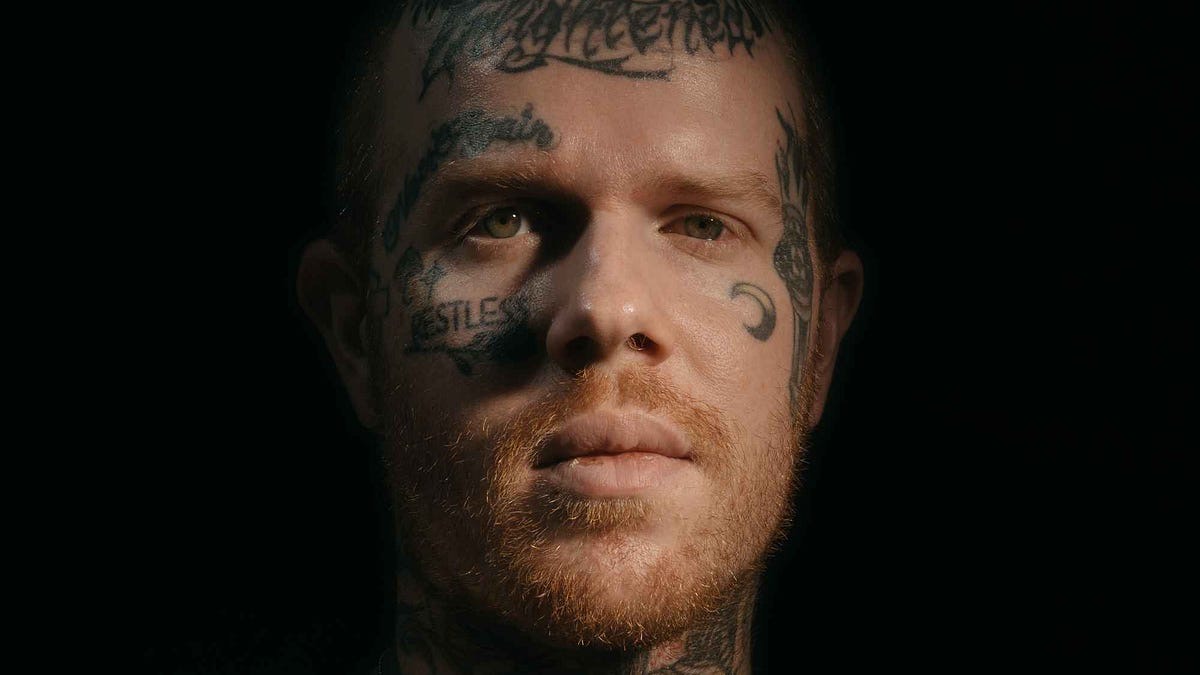
Tyler Hall finished his tattoo apprenticeship in 2012 and marked the occasion by getting a massive torch inked onto the side of his face. 'It was my dedication,' Hall, 34, told The Free Press. 'This is where I'm staying, and this is what I love.'
Hall works as a contractor at The Local Tattoo Studio in Clover, South Carolina. He has, by his own count, 'about seven or eight face tattoos right now.' He got none of them in his home state.
South Carolina officially legalized tattoos in 2004, but the law comes with a specific anatomical restriction: tattoo artists anywhere in the state are barred from inking anything above a client's shoulders. The penalty falls on the artist — up to a $2,500 fine, one year in prison, or both. The law also prohibits tattoo shops from operating within 1,000 feet of a playground, a church, or a school.
The practical consequence is straightforward. Hall says he turns down clients 'all the time' who come in requesting work on their head, face, or neck. His advice: drive a few miles to North Carolina, which is exactly what he did to get his own face tattoos. 'There's a clientele that has to go across state lines just for them to be able to express their First Amendment,' he said.
Now those restrictions face a legal challenge. A lawsuit filed last month names two South Carolina residents who say they want more tattoos, along with Tiny Zaps, a New York City-based tattoo shop that wants to operate in the state and says current law prevents it from doing so. The suit argues the restrictions are unconstitutional.
Hall describes his tattoos in plainly personal terms: an umbrella under his right eye to 'symbolize protection against obstacles in life,' the script Never Again over his brow from a song he loved as a teenager, a crescent moon, the word restless on his cheek, and a long-stemmed rose in honor of his daughter, whose middle name is Rose. He says the tattoos function as a 'bold statement of individual expression' and that reactions range from judgment by strangers to surprise that 'behind the rough exterior is a kind, God-fearing soul.'
---
The principle at stake here is not complicated. A state government is telling a licensed professional what part of a consenting adult's body he may legally touch with a needle — and threatening him with jail time if he disagrees. That is not public health regulation. It is aesthetic policing, enforced at the artist's expense.
Follow the incentive: South Carolina's law does not protect anyone. It redirects revenue to neighboring states, pushes consumers across borders for a service they will obtain regardless, and hands a competitive disadvantage to in-state businesses like Hall's. The lawsuit may or may not succeed on constitutional grounds. But the underlying question — whether the government has any legitimate interest in deciding where on your body you may place a tattoo — has an answer that does not require a courtroom. It does not.