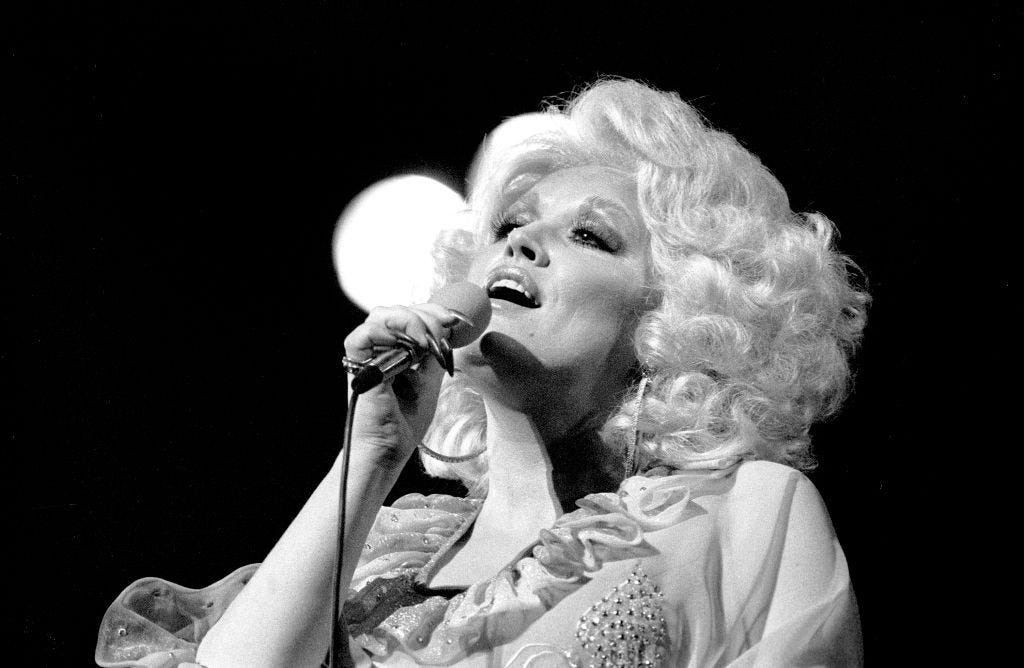
There is a clip from a 2020 documentary that says more about Dolly Parton than any biography could. She is not singing. She is reading — The Little Engine That Could — to a group of children, and when she reaches the famous line, she stops and asks them to say it with her. 'I think I can! I think I can!' They do.
That is the job she understood she had been given, and she did it gladly.
Parton was born in 1946 in Locust Ridge, Tennessee, in a one-bedroom log cabin at the feet of the Great Smoky Mountains. Her father, she has said, could not read or write. 'Daddy couldn't read or write, but he was the smartest person that I've ever known,' she told Librarian of Congress Carla Hayden at a 2018 ceremony where she donated her 100 millionth book.
That ceremony was a milestone for the Imagination Library, the charity Parton founded in 1995 as a literacy program for children growing up in the region where she was raised. The model is simple: sign up, and from birth to age 5, your child receives a free book every month. The first one is The Little Engine That Could. That choice is not accidental.
Today the program distributes over three million books per month across all 50 states and several foreign countries, making it one of the largest projects of its kind in the world. It is, as writer Spencer Klavan notes in The Free Press, 'the sheer embodiment of I think I can.'
What is worth pausing on is the structure of what Parton built. The Imagination Library is not a government program. It is not a mandate or a subsidy or a line item in a federal budget. It is a private charity, founded by a woman from a poor family in rural Appalachia, that has delivered books to children at a scale most public literacy bureaucracies have never approached. The incentive was personal. The execution was voluntary. The result is measurable.
Parton was also, by every account, clear-eyed about her own image — the rhinestones, the hair, the silicone — and never condescended to the fans who loved it. A lesser figure would have used the distance of celebrity to perform humility while keeping the hometown at arm's length. She did not. She showed up, Klavan writes, 'like it was a privilege.'
That combination — self-awareness without self-importance, ambition without contempt for where you came from — is rarer than it sounds. It is also, not coincidentally, the disposition that tends to produce durable institutions rather than press releases.
The Imagination Library is a durable institution. Three million books a month, delivered to children who might otherwise grow up the way Dolly Parton's father did: intelligent, capable, and unable to read a word. The program exists because one person decided the problem was hers to solve and did not wait for permission.
Follow the incentive, not the press release. What Parton built was free enterprise applied to a public good — private capital, voluntary participation, and a clear metric of success. The record is public, and it runs to over 100 million books. That is what 'I think I can' looks like when someone actually means it.