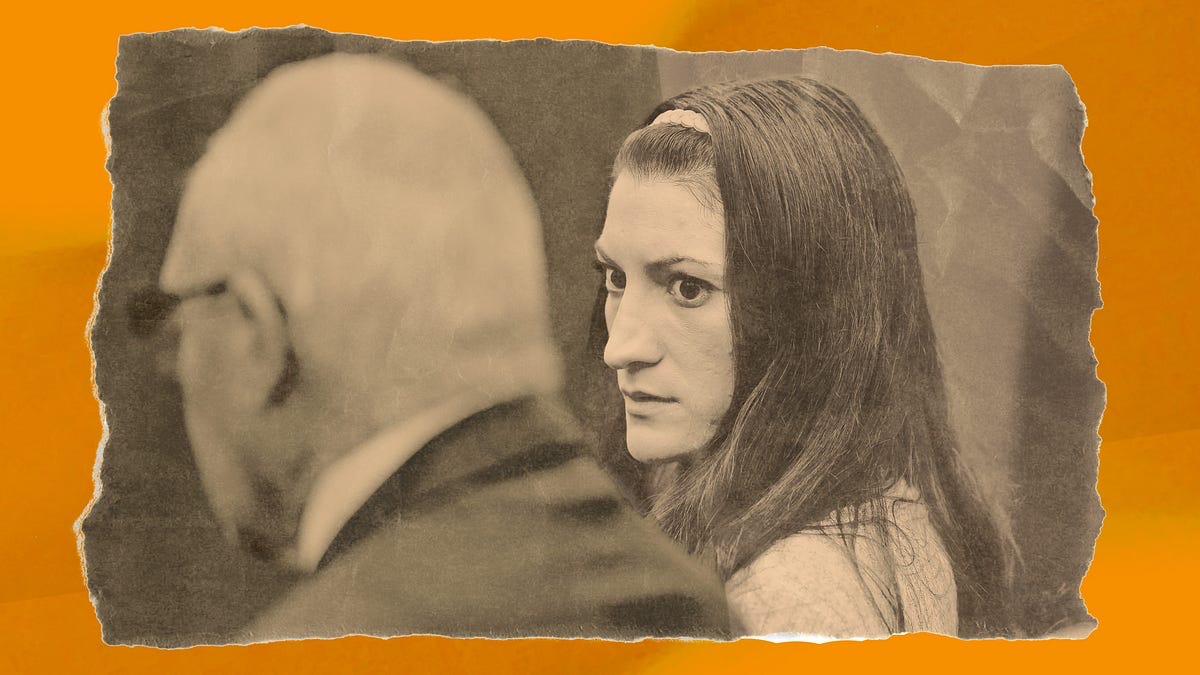
The murder trial unfolding in Plymouth, Massachusetts, has an unusual quality: there is no factual dispute at its center. Lindsay Clancy, her defense team, and the prosecution all agree that she strangled her three children to death in the basement of her Massachusetts home in early 2023. The only question before the court is whether she should spend the rest of her life in prison or in a mental institution — her lawyers arguing she was suffering from postpartum psychosis at the time.
And yet, on certain corners of the internet, that agreed-upon record has been set aside entirely. A chorus of women online has concluded that Clancy is innocent and that her husband, Patrick, committed the crime. A wider circle goes further still: they accept that Clancy did it, but frame her as a figure of solidarity. 'I could have been Lindsay. Any one of us could have been,' wrote one commenter, in a line that has become a recurring theme in her defense.
Say it plainly: that is not a legal argument. It is not even a factual one. It is a feeling — and feelings, however real, do not change what the record shows.
Writer Suzy Weiss, reporting for The Free Press, draws the comparison to O.J. Simpson's 1995 acquittal, when surveys showed roughly 70 percent of white respondents believed Simpson was guilty while a proportional share of Black respondents said he was not. That trial became a proxy for arguments about race and the criminal justice system. The Clancy trial, Weiss argues, is becoming a proxy for arguments about gender — specifically, the burden placed on mothers, and what happens when that burden breaks someone.
The parallel is instructive. In both cases, the public sorted itself not by evidence but by identity and grievance. The facts of the case became secondary to the story the case could be made to tell. In 1995, that dynamic produced an acquittal that a majority of Americans still regard as a miscarriage of justice. What it produces in Plymouth remains to be seen — though Clancy is not claiming innocence, which limits how far the online narrative can travel into the courtroom.
What the phenomenon does illuminate is something worth sitting with. The internet has not made us better at evaluating evidence. It has made us faster at finding communities that confirm what we already feel. The women rallying around Clancy are not, for the most part, arguing that the facts are wrong. They are arguing that the facts are beside the point — that the real story is systemic, structural, and shared. That is a coherent worldview. It is also one that, taken seriously, would make individual accountability nearly impossible to sustain.
Follow the incentive, not the press release. When a legal system built on individual responsibility collides with a cultural moment that prizes collective grievance, the collision is rarely clean. The Clancy trial will produce a verdict. The internet will produce something else — a narrative that outlasts the verdict, that absorbs the facts without being changed by them, and that tells a large number of people exactly what they wanted to hear before the first witness was called.
The record is public. What we do with it is a choice.