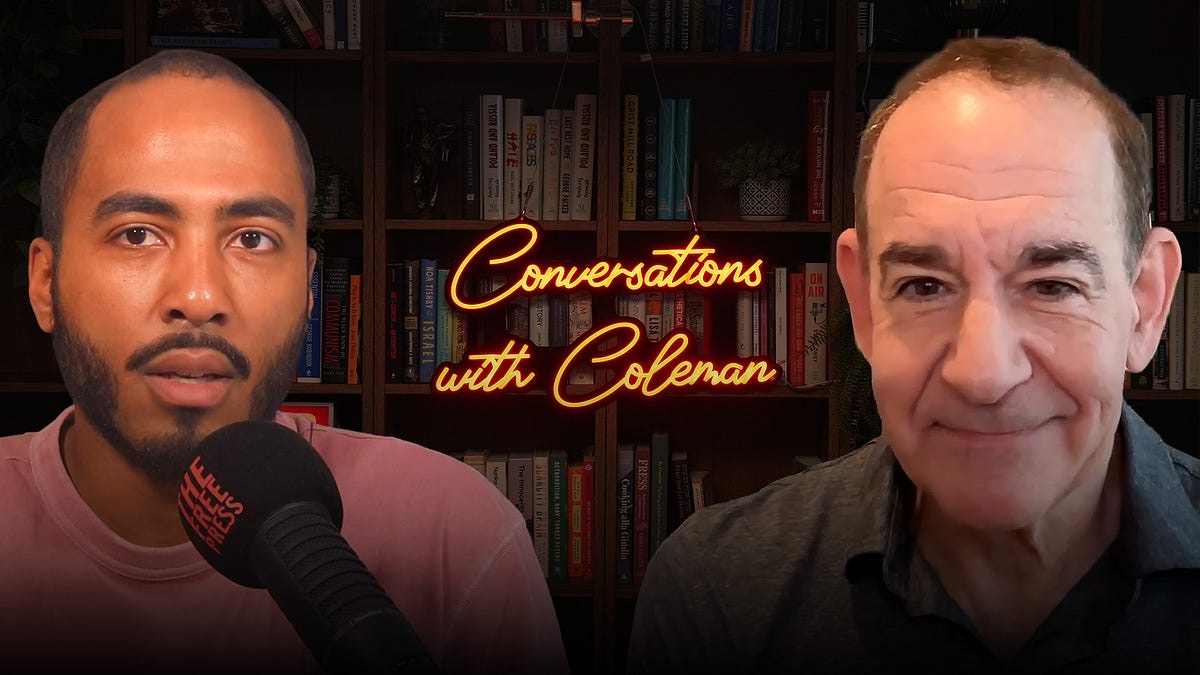
Coleman Hughes released a new episode of his podcast, Conversations with Coleman, on September 3, 2026. The guest is Tim Naftali, a presidential historian. The episode runs one hour and twenty-two minutes.
The subject is a familiar American habit: presidents who recorded themselves, on purpose or not, and left behind evidence of how they actually thought and behaved when the cameras were off. As the episode description puts it, some presidents taped themselves to protect their legacy. Others did it to protect their ego.
One detail carries the episode. Richard Nixon, a president famously without a sense of humor, spent time trying to manufacture one — after the fact. According to the account Naftali gives, Nixon had aides circulate lines from his private conversations, hoping journalists would report them as evidence of a wit he simply did not have.
That is the whole anecdote as the source presents it: an image-conscious man, working through intermediaries, trying to leak his own punchlines into the press. Whether the strategy succeeded is not part of the record given here. Only the attempt is.
Hughes, who hosts the podcast, is also a Free Press columnist covering race, public policy, and applied ethics. He has appeared on The View, Real Time with Bill Maher, The Joe Rogan Experience, and Making Sense with Sam Harris. In 2024 he published his first book, The End of Race Politics: Arguments for a Colorblind America.
—
What the Nixon anecdote captures, in miniature, is the distance between the office and the man who occupies it. The presidency is an institution built on the assumption that the public sees a performance; the tapes exist because someone, at some point, wanted a version of events that would outlast the performance itself.
Follow the incentive, not the press release. A president who leaks his own jokes through aides is not managing a legacy so much as managing an insecurity — and the fact that historians can now trace the mechanism, name by name, tape by tape, is itself a small victory for transparency over myth-making. Nixon did not get to write the ending. The tapes did.
That is the trade-off built into every recording device a president has ever turned on, deliberately or not. It flatters no one evenly. It preserves the record whether or not the record is kind. Say it plainly: the men who occupied the most powerful office in the world were, on tape, just men — anxious about how they'd be remembered, and occasionally willing to fake the parts that didn't come naturally.
The record is public, eventually, one way or another. That should be a comfort to anyone who values evidence over image, and a caution to anyone currently deciding what gets said on the record and what gets left for the aides to leak later.