There is a new third rail in American politics, and it is mounted on a pole at an intersection near you.
The Flock camera reads license plates to assist local law enforcement. Depending on your politics, it is either making streets safer or building a high-tech surveillance apparatus whose growing power is ripe for abuse. According to reporting from The Free Press, there is evidence to support both of those claims.
Flock cameras have already stopped or helped solve more than 700 crimes, including 79 homicides. That is a number worth sitting with. So is this one: police officers have been charged with or accused of illegally using Flock cameras to stalk their ex-girlfriends. And in 2023, two New Mexico women were arrested at gunpoint after a Flock camera mistook a 2 on their vehicle's license plate for a 7.
The technology is not neutral. Neither is the debate around it.
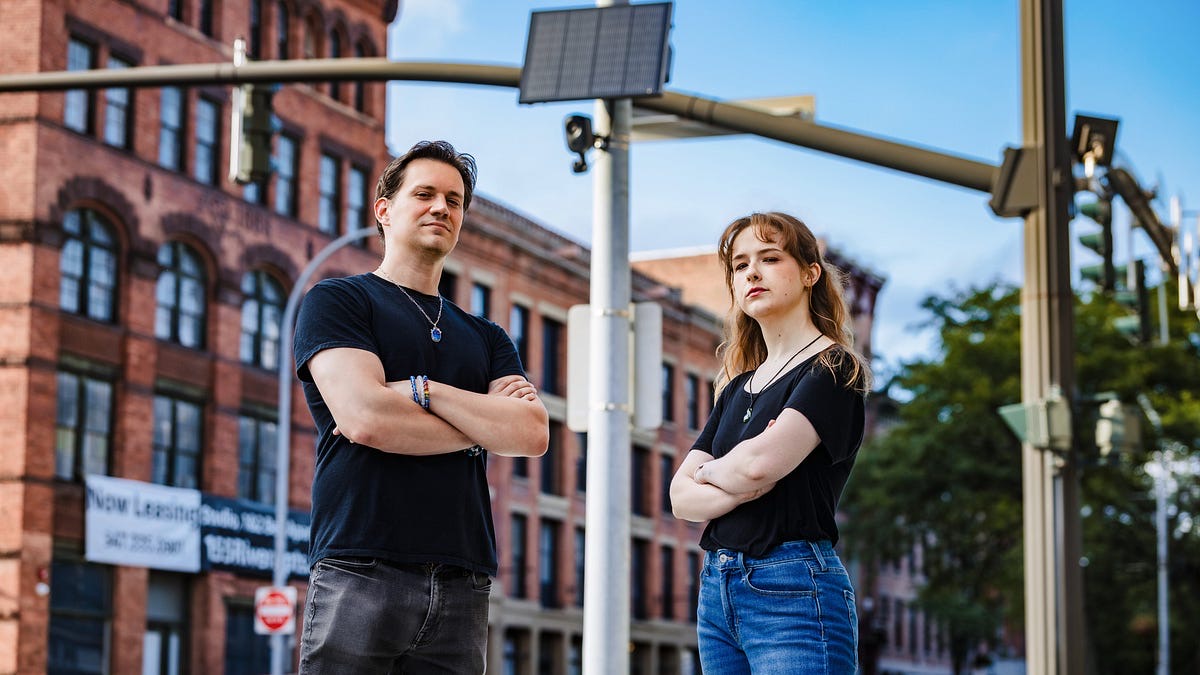
Reporter River Page traveled to Troy, New York, a town of about 50,000 residents, where locals are fighting over a law that would restrict how Flock camera data can be stored and used. The mayor, who opposes the bill, sees it as a thinly veiled 'pro-crime' effort to defund the police. Other residents claim they are being spied on and have resolved to 'get rid of Flock through policy or force.'
Flock, River writes, has become a totem of what these residents — and many other Americans — view as 'a ruthless, anti-democratic tech industry dead set on remaking the world for its benefit by forcing AI and mass surveillance down everyone's throats.'
That framing has produced an unusual coalition. The populist left and the don't-tread-on-me right rarely share a banner. On Flock, they are sharing one.
The story Page delivers is, by his own account, a complicated one about trust and the tug of war between a politics that won't tolerate injustice and one that won't tolerate disorder. The question it leaves on the table is not a new one, but the technology has made it harder to defer: how much crime are we willing to endure in the name of privacy? Or, put differently, how much freedom are we willing to give up in the name of safety?
Troy will not answer that question for the country. But it will produce a local policy answer, and the record it generates will be public.
What the Flock debate in Troy makes plain is that the trade-off here is genuine, not rhetorical. A government that cannot keep order is not protecting liberty — it is failing at its most basic obligation. But the record already shows that the same tool capable of solving homicides is also capable of wrongful arrest and personal abuse by the officers entrusted with it. The institutions meant to govern that trade-off — city councils, oversight bodies, state legislatures — are arriving late to a network that is already built and already running. That is the pattern with every powerful capability the administrative state acquires: accountability follows capability by years, sometimes by decades. The citizens of Troy who are demanding that accountability arrive before the network expands further are not wrong to do so. The question is whether their elected officials have the will to deliver it before the cameras multiply further.