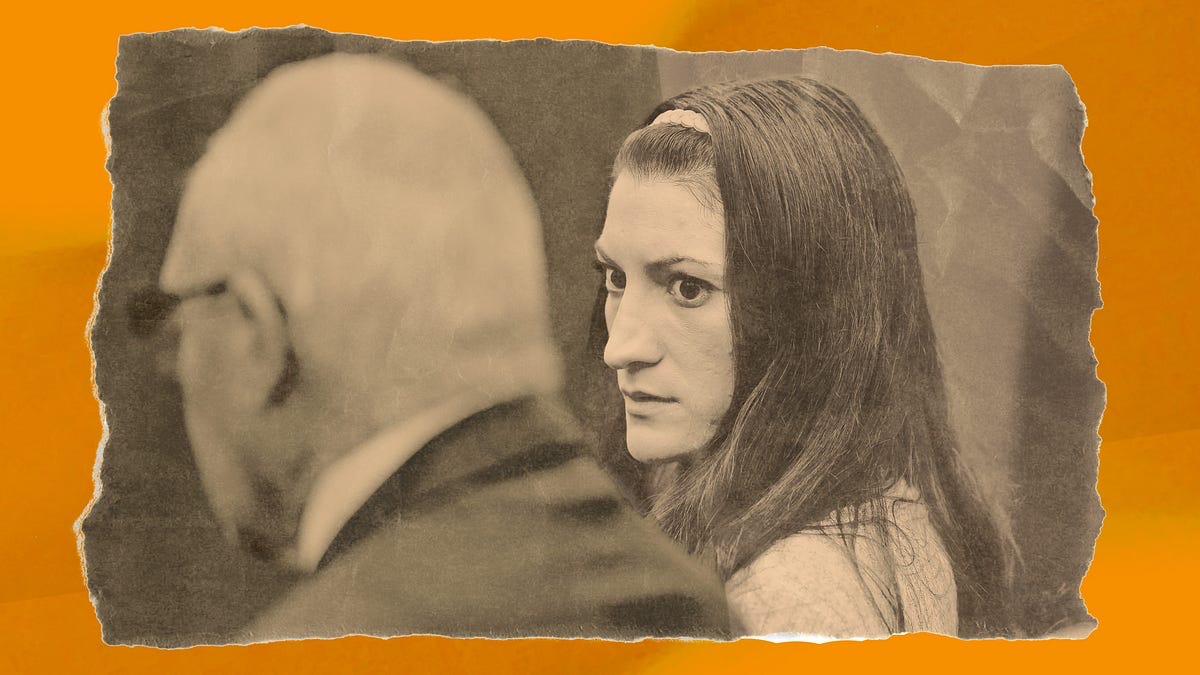
Evan Barker did not leave the Democratic Party because she stopped believing in healthcare reform or economic relief for working families. She left, she writes in her memoir Nothing Left: Confessions of a Democratic Operative, because the party she served as a fundraiser had been captured — by its donor class and by activists who, in her telling, made race and gender the organizing principle of everything, and who 'despise white people' even as many of them are white themselves.
Barker, now 33, grew up in a working-class Midwest family. During one stretch between campaign cycles, she had nowhere to live because her mother and grandmother were already sharing a house trailer to cut costs. She came to Democratic politics through a rare and potentially fatal genetic condition — she wanted to fix the healthcare system she had fought her whole life. She became, by her own account, a genuine Bernie Gal in 2016, and discovered she was good at raising money.
What she found inside the machine was something else. Party leadership, she writes, would rather see progressive Democrats lose congressional primaries than surrender message control. The donor class and the activist base had fused into a single force, and that force had decided that identity — race, gender, the full taxonomy of grievance — was the product being sold.
The result, in Barker's diagnosis, is a party of 'man-hating girlbosses' who prioritized group identity over the economic and healthcare concerns that brought people like her into politics in the first place. The working-class voters the party once claimed to represent noticed. They left.
Rod Dreher, writing in The Free Press, says he read the book with the instinct to feel vindicated — conservatives warned this would happen — and then caught himself. His column is a direct address to J.D. Vance and the GOP. The warning: 'rising white identity–politics activists on the right have shown no interest in compromise.' The mechanism Barker describes — a party's activist and donor wings locking out dissent, narrowing the coalition, and replacing policy with identity — is not a Democratic patent. It is a political pathology available to any party willing to catch it.
Dreher's prescription, as he frames it, is that Vance must 'establish' and 'defend' the border of political conservatism against that drift.
---
The Signal's read: Barker's book is useful precisely because it comes from inside the machine, not from its critics. Her account of how a party trades its working-class base for activist purity is a documented case study, not a theory. The lesson is structural: when identity becomes the primary currency of political belonging, the people who joined for bread-and-butter reasons — healthcare, wages, economic stability — eventually do the math and walk.
Conservatism built its recent majority on exactly those voters. The question Dreher is raising, and that the GOP would be wise to take seriously, is whether the right is now importing the same incentive structure that drove them out of the other party. Follow the incentive, not the press release: if the activist base and the donor class on the right converge on white identity as the organizing principle, the working-class coalition that delivered recent Republican victories has no particular reason to stay. The record on this is already written — in blue.