Peter Richmond, the sportswriter, opens with an object: a handwritten note Walter Cronkite sent him in 2002. He found it three years ago while sifting through boxes, and by his own account, he had not framed it, had not treated it as anything special, for two decades.
The note followed a magazine assignment. Richmond, on contract for GQ, was reporting a story on how to age gracefully, and he decided Cronkite — then 86, sidelined from tennis by a bad knee but otherwise, in Richmond's telling, 'pretty much on top of the world' — was the obvious subject.
The two men had lunch more than once: Cronkite with a Maker's Mark on the rocks followed by pasta at his favorite Italian place, or Dover sole at his club; Richmond with a Stoli martini and a twist. In the note, dated after the GQ piece ran, Cronkite thanked him for 'exceedingly kind remarks,' mentioned an upcoming trip to the Baltic and Russia with his wife Betsy, and signed off: 'please cling to the faith.'
The faith, Richmond explains, had nothing to do with religion or politics. It was the New York Giants. The two had bonded over a shared rule: neither watched a game with company, because, in Cronkite's words, 'It's way too personal an experience.'
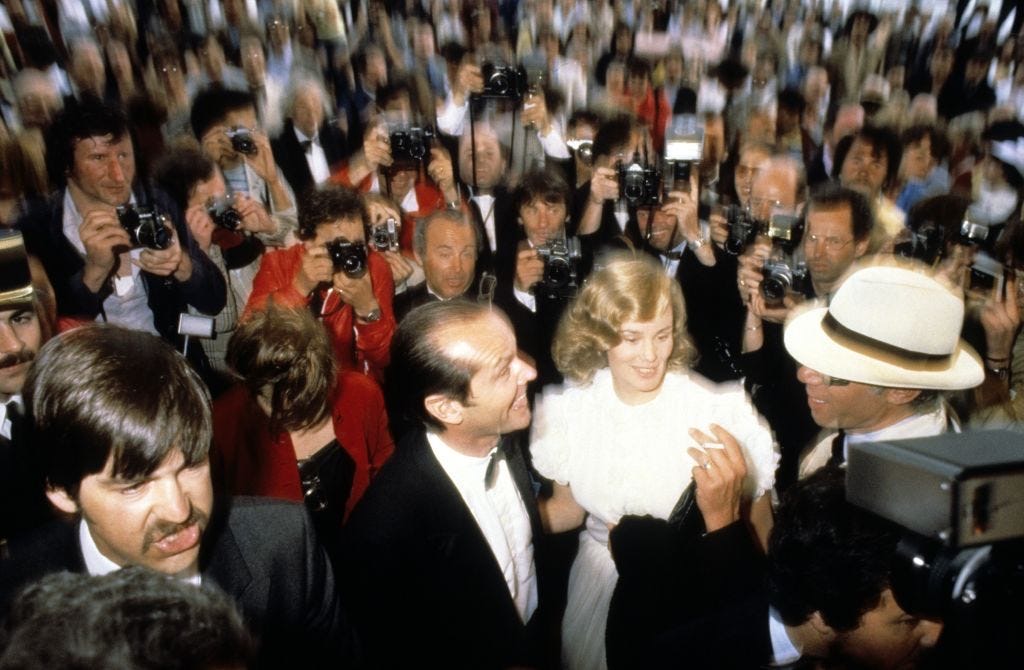
That lunch was the exception in a career built on proximity to fame. Richmond writes that for 'the better part of a quarter of a century,' he made his living writing about people 'way more famous than you and me' — a list that in his account includes hanging out with Bill Murray, getting a hug from Mark Wahlberg, drinking boilermakers with John Goodman, and playing miniature golf with Geena Davis.
He is candid about what came with the access: subjects with more money than he would ever have, personal assistants on call, and fame itself. He is equally candid about the limit of his admiration. 'With the exception of Walter, a truly great man,' Richmond writes, 'I never wanted to be any of them.'
The essay does not linger on any of the encounters it lists. It is, by Richmond's own framing, less a catalogue of celebrity anecdotes than an accounting — of what a career spent orbiting fame actually amounted to, and of the one relationship, with a broadcaster rather than a movie star, that outlasted the assignment that produced it.
The record here is a personal one, and it is worth taking on its own terms. But it also says something about the trade the celebrity-profile business has always asked journalists to make: access in exchange for proximity, proximity in exchange for a story, and a story that, more often than not, tells readers less about the subject than about the machinery that produced the interview.
What distinguishes Cronkite in Richmond's telling is not fame at all — it is character, and a friendship that survived long after the professional reason for it had expired. That is not a small distinction. An industry built on chasing boldface names will keep producing profiles; it will not necessarily keep producing a letter someone bothers to save for twenty years.