It is not every day that the private notes of one of the most consequential public-health officials in American history become public record. Last month, that day arrived.
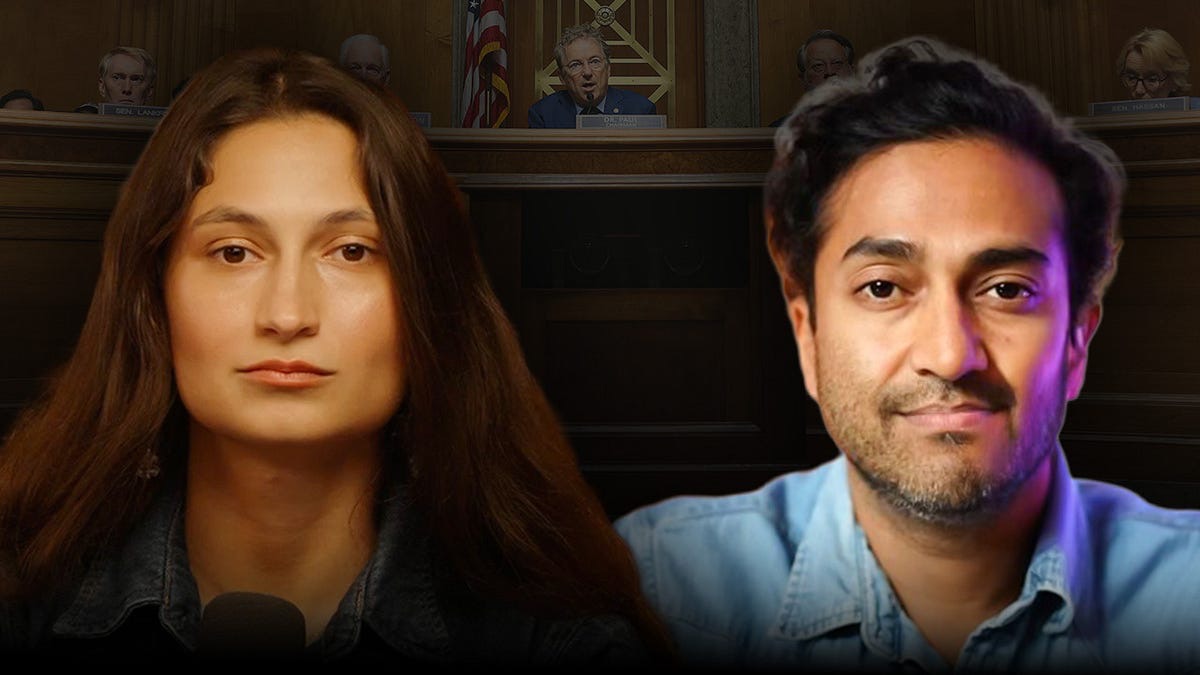
In late July, Senator Rand Paul publicly released more than 1,000 pages of notes that Dr. Anthony Fauci had kept on a government server during his time as the country's Covid-19 czar, covering the period between 2019 and the end of his tenure. The release was reported by The Free Press.
The files, according to that reporting, expose what is described as 'a stark gap between what Anthony Fauci said publicly — and what he really believed.'
That sentence deserves to sit on the page for a moment.
Fauci was not a minor bureaucrat. He was the face of the federal government's pandemic response, the man whose pronouncements shaped school closures, mask mandates, vaccine policy, and the daily lives of hundreds of millions of Americans. He appeared before Congress. He gave televised briefings. He was, by any measure, the most visible scientist in the country for the better part of three years.
If the record now shows a material difference between what he said at the podium and what he wrote in private — on a government server, using taxpayer-funded infrastructure — that is not a personal matter. It is a public one.
The full contents of the notes have not been reproduced in the available reporting, and this outlet will not speculate about specifics beyond what the sources document. What the sources do document is the characterization: a stark gap. The word 'stark' is doing real work in that sentence, and it was chosen by reporters who have read the pages.
The mechanism of release is itself worth noting. These notes were not obtained through a leak or a court order. They were held on a government server — meaning they were, in principle, always public property. Senator Paul's office made them available. The question of why it required a senator's intervention to surface documents that belonged to the public from the moment they were created is one that the relevant agencies have not yet answered on the record.
The broader institutional lesson is not complicated. When a single official is granted extraordinary authority — the power to recommend policies that carry the force of law, to shape public behavior, to influence the allocation of billions in federal spending — the public's claim on his private reasoning is not a courtesy. It is a condition of the arrangement. Accountability is not a punishment for bad actors. It is the price of power in a republic.
What is true does not need an adjective. The notes exist. The gap, by the account of those who have read them, is stark. The record is now public.
The reckoning, if there is to be one, begins with reading what is actually there — and asking, plainly, why the distance between the public statement and the private belief was maintained for as long as it was, and at whose expense.