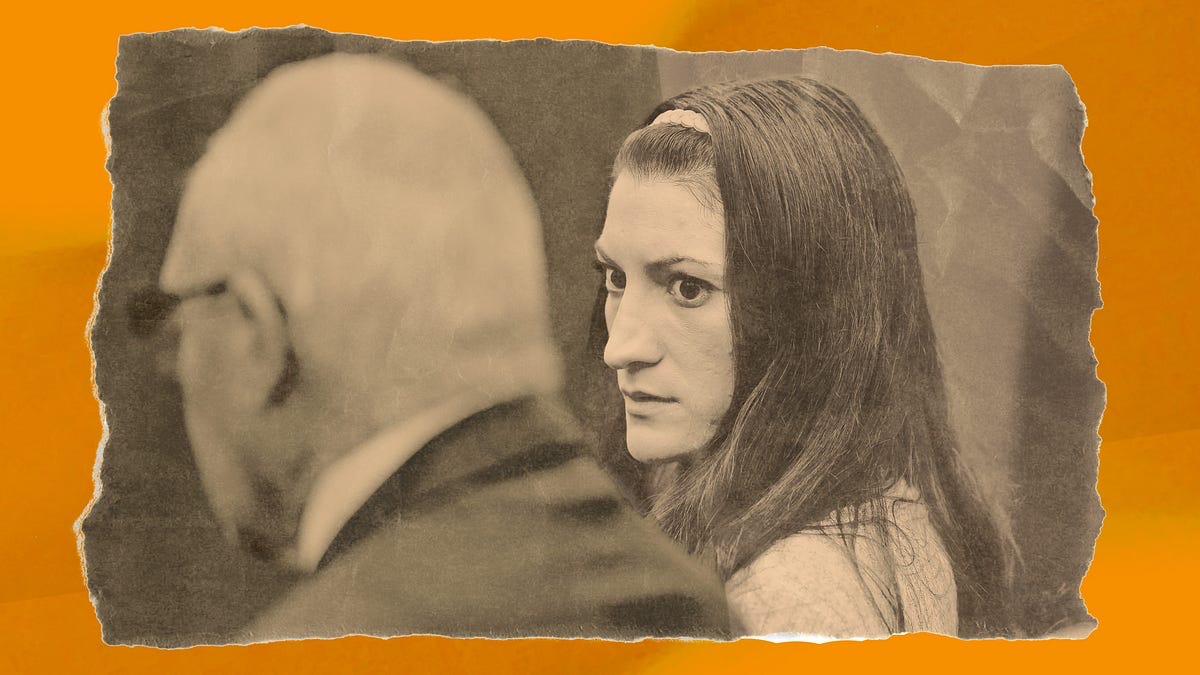
In April, Erin St. Gull, 22, printed one hundred copies of a one-page document and posted them around Toronto. She calls it a 'dating doc.' It lists what she is looking for — marriage, children, someone in their late 20s or early 30s who can make her feel excited about life — and what she offers in return: fertility, youth, and what she describes as being 'philosophically inclined and ruthlessly committed to reason.' When the posters failed to produce results fast enough, she left Toronto, traveled through thirteen European cities, and attended an effective altruism conference, 'conscious,' she said, 'that there would be a high concentration of eligible bachelors and bachelorettes in this circle.'
St. Gull is one of a small cohort of young people who have decided that Tinder being terrible is not the same thing as love being impossible. That distinction, obvious as it sounds, is apparently not obvious enough. The New York Times has run pieces titled 'Gen Z Can't Afford a First Date' and 'Gen Z-ers Are Ditching Sex. They Might Be Onto Something.' The Cut has declared that 'heterosexual women have reached a breaking point.' Celibacy, in certain corners of the internet, is glamorized.
The pessimism has a cost. If you tell young people often enough that the search for love is not worth it, some of them will believe you.
The more revealing data point came from Jake Kozloski, founder of Keeper, an AI matchmaking service. Kozloski told reporter Kara Kennedy that Hinge had explored acquiring his company — but objected to Keeper's stated mission, which is 'to give everyone on Earth the opportunity to marry the right person.' According to Kozloski, someone on Hinge's team called him directly. 'I ended up getting a stern call from someone on their team saying that they read our blogs and did not like that they were pro-marriage,' he said, 'as they felt that was a value judgment they weren't comfortable making.'
Read that twice. A dating app — a company whose entire business proposition is connecting people romantically — found the goal of marriage too controversial to endorse. The incentive structure, once you see it, is not complicated: an app that successfully pairs people off loses two users. An app that keeps them swiping retains them indefinitely. The product was never a match. The product was the search.
St. Gull arrived at the same conclusion empirically. 'At some point,' she said, 'my relationship with dating apps shifted from 'I'm trying to find someone on here,' to, 'I am using this purely for entertainment, and on the off chance that someone comes along and is actually interesting, I'm going to talk to them.'' Dating apps, she concluded, are 'one channel' — and one that often leads nowhere.
Follow the incentive, not the press release. The apps are not broken. They are working exactly as designed — optimized for engagement, not for commitment, and certainly not for marriage. The young people posting paper flyers on city walls and scanning conference rooms for eligible partners are not naive romantics. They are consumers who read the fine print and decided to shop elsewhere.
The deeper principle here is one the market usually gets right when it is allowed to: when an existing product fails to deliver what people actually want, someone builds a better one. The post-app generation is not giving up on love. It is giving up on a particular business model that was never aligned with their interests. That is not a crisis. That is how competition is supposed to work.