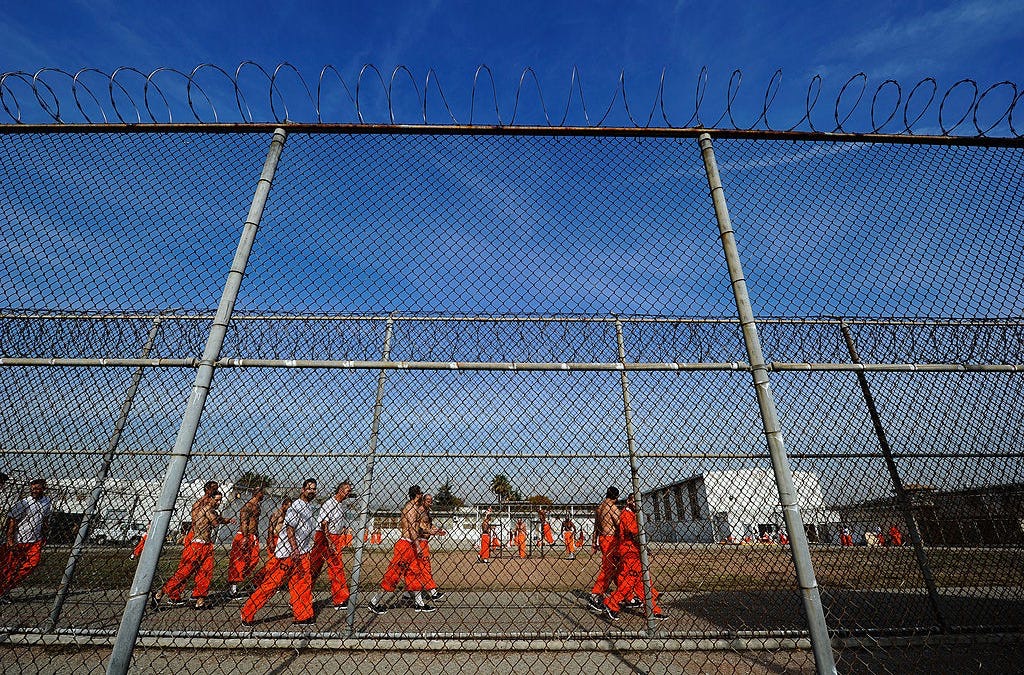
The United States has been imprisoning people at a steadily declining rate over the first two decades of the 21st century. That is not an opinion. It is the central finding of a peer-reviewed study published in Nature Human Behaviour, authored by sociologists Jason Robey and Michael Light from the universities of Wisconsin and Iowa.
The study's title leaves little room for interpretation: 'Why America's Prisons Are Shrinking and Racial Gaps Are Closing.' The prison population today is not only significantly smaller than it was in 2000 — it is also much less skewed by race. Annual new prison admissions for black people fell more than for white people during that period. Those are the numbers.
What is driving the decline? Here the study is equally direct. One of the main drivers of lower prison admissions is not more lenient treatment of violent offenders. It is a lower violent crime rate. The criminal justice system, in other words, is responding to reality: fewer violent crimes produce fewer prison admissions. The mechanism is not ideological. It is functional.
This creates an uncomfortable problem for a narrative that has dominated progressive policy circles for more than a decade. Michelle Alexander's 2010 book The New Jim Crow argued that prison had become a modern means to subjugate black Americans, and that framing became the foundation of the 'mass incarceration' movement. The Democratic Socialists of America went further, calling for eventual prison abolition as a key plank in its platform.
According to Charles Lane, writing in The Free Press, the study shows that the criminal justice system was already moving toward less incarceration — and less incarceration of black offenders specifically — when national concern over 'mass incarceration' was peaking in the mid-2010s. The reform the movement demanded was, in measurable ways, already happening.
Say it plainly: a narrative built on a broken, incurably racist system collides here with peer-reviewed evidence of a system that was, in fact, correcting. That does not mean every grievance was invented or every reform unnecessary. But it does mean the policy prescriptions that followed from the narrative — including abolition — were built on a foundation that the data do not support.
Follow the incentive, not the press release. When a political movement's platform rests on a diagnosis of permanent, systemic failure, it has every reason to resist evidence of improvement. The DSA has not updated its platform. The conventional wisdom on the left, as Lane notes, still reflects the 2010 framing. The study was published. The gap between the record and the rhetoric is not a rounding error.
What is at stake is not just a sociological argument. It is the question of whether criminal justice policy — which affects real people, real communities, and real public safety — will be driven by evidence or by a story that stopped matching the facts sometime around the mid-2010s. A virtuous cycle of less crime and less incarceration is genuinely good news. It deserves to be treated as such.