The inauguration is scheduled. The campus is not ready.
On August 3, 2026, the Multicampus Universitario de Suba — announced by the Petro government as a historic solution for higher education in northwestern Bogotá — is supposed to open its doors. According to a letter sent by Councilman Fabián Puentes of the MIRA party to president-elect Abelardo de la Espriella and designated Education Minister Viviane Morales Hoyos, the facility has no electricity grid, no water connection, no permanent contractor, no construction supervision, and no execution schedule.
Say it plainly: the school has no lights and no running water.
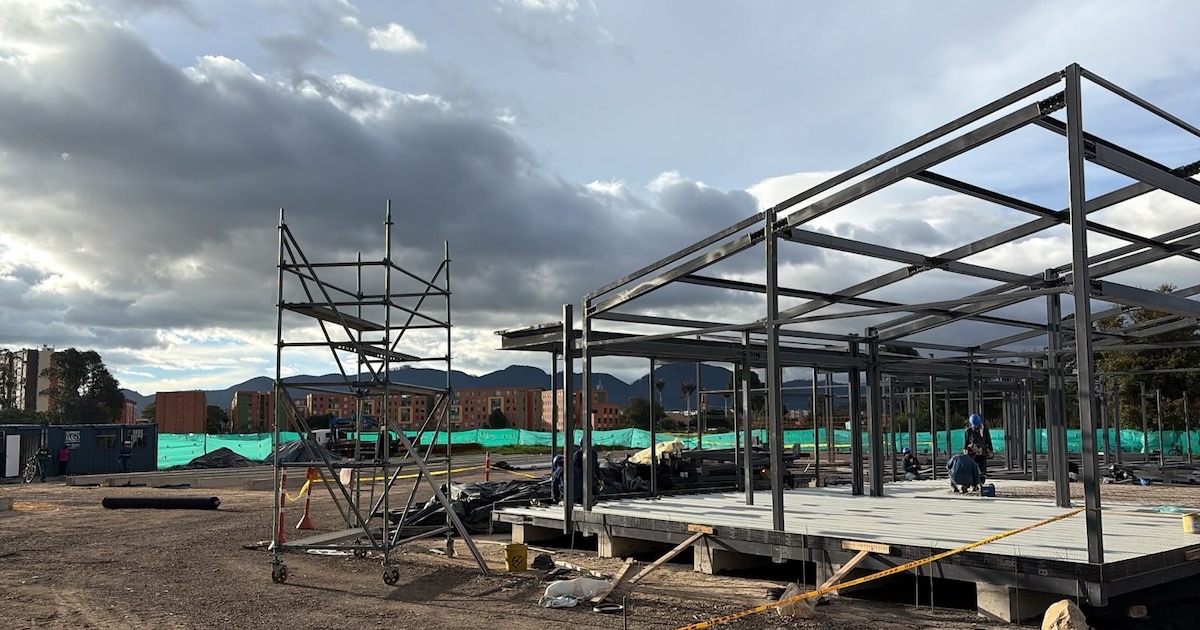
The Agencia Nacional de Infraestructura Modular (Anim) confirmed to the MIRA caucus that no contractor selection process is underway or even projected for the permanent phase of the project. The only active contract covers provisional, modular classrooms — and even those have not reached the 88.53 percent completion target set for August, according to the Bogotá Secretariat of Education.
Councilman Jesús Araque of the Nuevo Liberalismo party added another layer of concern: the government announced 920 available university slots, while official Ministry of Education documents reference only 300 new spots per semester. No final studies or designs have been completed. No construction permit has been obtained.
A provisional solution that may become permanent
The project was originally conceived as a permanent public campus for 15,000 students. That target has since been revised downward — though no updated enrollment figure has been made public. What exists on the ground is a partially assembled cluster of modular classrooms.
'Our central concern is that the provisional ends up occupying the place of the permanent,' Puentes wrote, warning that temporary modules cannot substitute for the libraries, laboratories, and welfare spaces that real university education requires. The precedent is not hypothetical: Councilman Araque pointed to the Multicampus de Kennedy, where students were similarly absorbed into temporary facilities and never received a permanent campus.
The Bogotá district government is not without responsibility. The city was obligated to deliver the land for the campus; it did so only at the end of March. Secretary of Education Julia Rubiano has since asked the national government for clarity on how it plans to serve the students who already enrolled before inscriptions closed in June. 'As a district we want to ask for that kind of clarity and to know what the plan is to provide attention to the young people,' she said.
The Universidad Pedagógica Nacional is slated to operate programs in Physical Education, Community Education, and Graphic and Visual Arts at the campus, located at Calle 145 with Carrera 115, with an initial investment reported to exceed 23 billion pesos.
What the record says
The Multicampus de Suba was a Petro government commitment. The record shows a project announced with fanfare, coordinated poorly between national and district authorities, and now handed to an incoming administration as an open liability.
President-elect Espriella and Minister-designate Morales Hoyos will need to decide quickly whether to absorb the political cost of delay or the institutional cost of opening a campus that cannot function. Neither option is clean. What is clear is that the students who enrolled in good faith deserve a straight answer — and that the taxpayer money already committed deserves an accounting. Follow the incentive, not the press release: when no contractor exists and no schedule exists, the project does not exist.