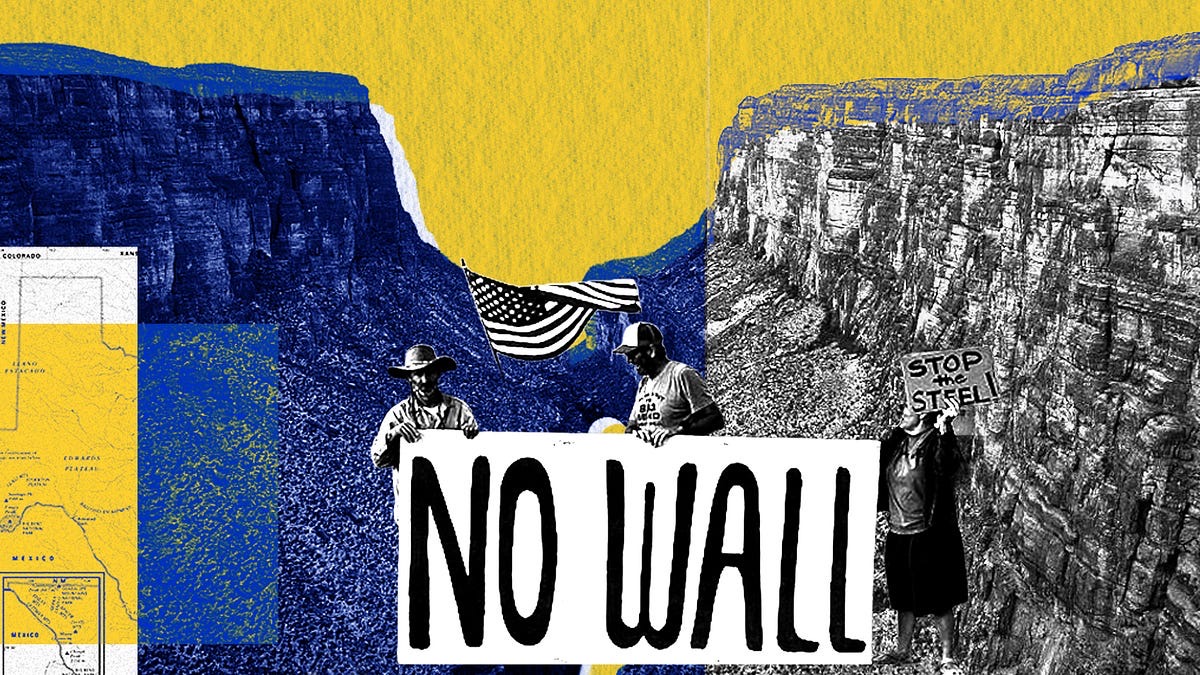
The administration paused part of its border-wall project in the Big Bend region of West Texas this week, according to reporting by The Free Press, as local backlash against the construction intensified. The pause is partial. The bulldozers had already reached iconic landmarks, including the Santa Elena Canyon, where 1,500-foot limestone cliffs rise above the Rio Grande.
The people pushing back are not progressive activists. The Big Bend region is, by most accounts, politically conservative country. Yet residents say the project is both destructive and pointless — that natural barriers in the area already make illegal border crossings exceedingly rare, and that the wall amounts to an expensive exercise in security theater in a place that does not need it.
The economics of the region are not incidental to this argument. Big Bend National Park and the rugged wilderness along the Rio Grande draw visitors precisely because the landscape is extraordinary. Locals say that scenery is now threatened. The record on this is straightforward: the area depends in part on tourism, and the construction is happening at the sites people come to see.
Elsewhere in the news this week, Palm Beach International Airport was officially renamed Donald J. Trump International Airport — the first airport named for a sitting president. The new airport code, DJT, took effect, with the total rebrand cost reported at $5.5 million, half of which came from Florida taxpayers.
The Department of Justice unsealed a 14-count indictment charging 17 Iranian cyber criminals with a hacking campaign conducted on behalf of the Islamic Revolutionary Guard Corps. According to the indictment, the campaign allegedly breached 144 American universities and resulted in the theft of 31 terabytes of research and intellectual property. The State Department is offering up to $10 million for information on five of the defendants.
Opening statements also began Tuesday in the trial against Meta, with prosecutors accusing the company of deliberately addicting children to its social media platforms. Four state attorneys general are seeking penalties that could be substantial. Mark Zuckerberg is expected to testify.
The Big Bend story is the one that deserves the most careful attention, and not only because of the landscape at stake. It illustrates something that grand policy visions reliably produce when they meet local reality: friction from the people who were supposed to be on your side. The residents of West Texas did not vote against border security. They are questioning whether this particular wall, in this particular place, serves any security purpose at all — or whether it is a symbol consuming taxpayer money and irreplaceable terrain in roughly equal measure.
Follow the incentive, not the press release. A wall that locals call pointless, built at significant federal expense through a national park, in a region where illegal crossings are already rare, is not a security investment. It is a line item. The administration has the legal authority to build it. Whether it should is a question the pause this week has not yet answered — and the answer, when it comes, will say something about whether this White House can distinguish between a signature issue and a sound one.