Ariana Grande announced this week that she would be 'taking a step back from visibility.' According to her representatives, the singer is 'taking a much-deserved break from public-facing work and appearances, which has led to endless, ongoing public scrutiny.' The announcement followed growing concern — from fans and media alike — about her visibly shrinking frame.
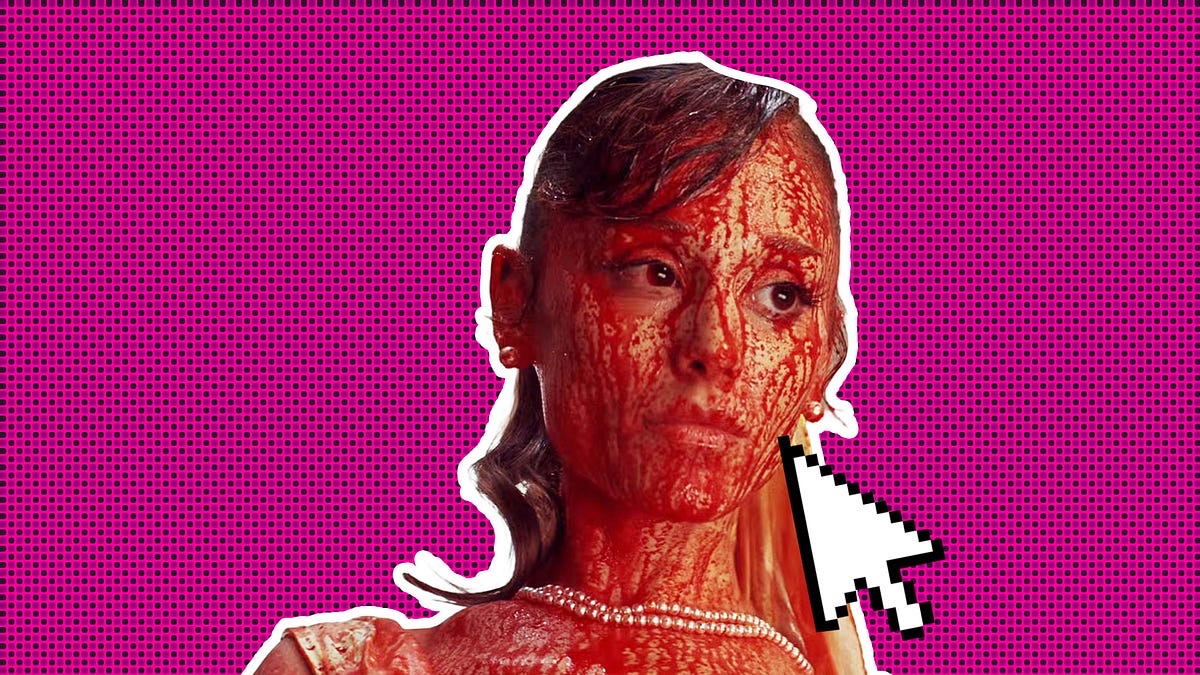
The timing was not incidental. Grande had just released a new music video, 'Petal,' in which she appears, by multiple accounts, skeletal — dressed in 1950s-style outfits as she auditions before a panel of judges she eventually, in the video's climax, kills with a chainsaw. 'Tell me who's to blame, is it the people or myself?' she sings. 'This is not a cry for help.' One widely liked comment beneath the video read: 'The elephant in the room is impossible to ignore. She is really sick.'
At a recent concert, Grande addressed fans directly about her decision to step away. Several things, she said, can be true at once. She has been touring and promoting Wicked and performing her albums for years. She has also lived through the dissolution of a marriage, the end of a subsequent relationship, the death of her ex-boyfriend Mac Miller, the breakup of another engagement, and a terrorist attack that killed 22 of her fans in Manchester — all within the last decade.
The record is public. The accumulation is not small.
The broader cultural moment makes the story harder to read clearly. Between a therapeutic culture that insists on radical self-acceptance and the rapid spread of weight-loss drugs that allow near-total control over body composition, it is tempting to assume eating disorders are a solved problem. They are not. Anorexia, as writer Hadley Freeman — who chronicled her own severe anorexia in her book Good Girls — noted in these pages, is 'an ancient scourge.' Freeman's own account is instructive: 'I hadn't even heard of Kate Moss,' she wrote, dismantling the easy explanation that eating disorders are simply a product of fashion trends or influencer culture.
The clinical reality, as Freeman and others have documented, is that the disorder is less about aesthetics than about control — a rigid, punishing imposition of order on a life that feels uncontrollable. In some cases, a misguided attempt to avoid growing up. It can be a twisted form of perfectionism. It does not require a runway or a tabloid to take hold.
Writer Suzy Weiss, who covered this story for The Free Press, offered a measured read: Grande is suffering, but she is unlikely to share the fate of Whitney Houston, Amy Winehouse, or Karen Carpenter. The expectation, Weiss wrote, is that when Grande is ready, 'she will come back with a vengeance.'
That may be right. We hope it is.
What the episode illustrates, plainly, is the cost of a culture that oscillates between two bad poles: the therapeutic insistence that nothing is wrong if the individual says nothing is wrong, and the tabloid appetite that treats visible suffering as content. Neither serves the person at the center. The incentive in both cases runs against honest reckoning — and honest reckoning, early, is the only thing that has ever actually helped. Grande deserves the break. She also deserves a culture honest enough to say what it sees.