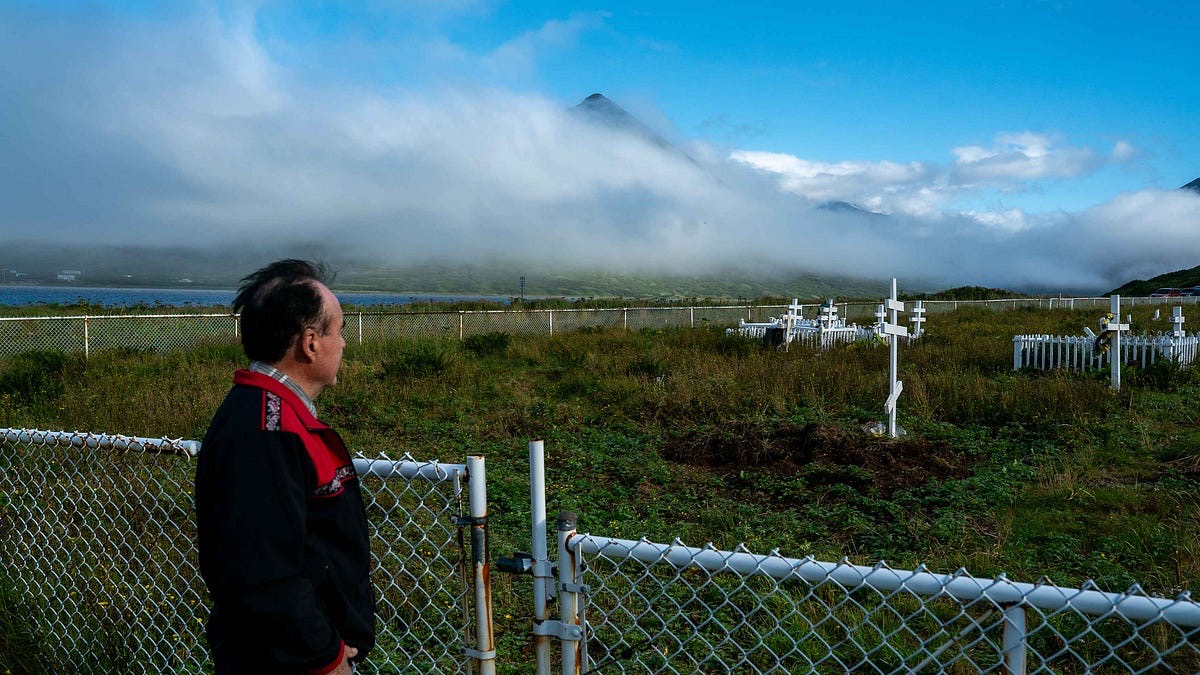
King Cove, Alaska is a fishing village of several hundred people, most of them Native, set among volcanoes in the Aleutian chain that separates America from Russia. It sits nearly 900 miles from Anchorage, the state's largest city, and its only landing strip — a single gravel runway — is unusable, on average, 100 days a year because of weather.
Eighteen miles away, in Cold Bay, there is an all-weather airport. No road connects the two towns.
'Nineteen eighty was the first crash,' said Garry Hennigh, King Cove's longtime city manager, in an account reported by The Free Press. That year, a fisherman named Tom Phillips lost his leg in a boating accident. Cathy Hoff, the village's only medical care provider, said he needed to reach a hospital in Anchorage to survive. King Cove's airstrip was unusable that day.
The local carrier, PenAir, decided to fly out anyway. Hoff and another fisherman, Darien Gorsinger, boarded to help. 'They crashed right before they got to Cold Bay,' Hennigh said. 'The Coast Guard came and found everybody dead about six hours later.'
That crash, according to Hennigh, is what started the campaign to build a gravel road between King Cove and Cold Bay. More than four decades later, the road still does not exist. Hennigh says 19 people in total have died in King Cove either from lack of timely medical care or in plane crashes tied to the airstrip's unreliability.
Warren Wilson, the current mayor of King Cove, has continued the fight his predecessors began — a fight now well into its fifth decade. The Free Press reports that the effort has been blocked by activists far from the Aleutians, who have opposed construction of the road on environmental grounds.
The reporting, by River Page, does not yet detail the specific legal or regulatory mechanisms activists have used, but the headline and framing of the account are unambiguous: for 40 years, a road that residents say would save lives has not been built, and the obstruction has come from outside King Cove itself.
What is true here does not need an adjective. A village of a few hundred people has counted 19 dead over four decades while asking for eighteen miles of gravel. The people making that decision for them do not live there, do not fly out in bad weather, and do not bury the dead.
This is the trade-off that abstract environmentalism rarely has to name out loud: a wilderness designation weighed against a human life, decided by people who bear none of the cost. Follow the incentive, not the press release — the activists who block the road face no consequence when the plane goes down. The people of King Cove do.
Self-determination is not a slogan in a place like this. It is the difference between a hospital and a crash site. The record is public, and after 40 years, it says plainly that a remote American village has been left to die by inches so that a road might never be built.